
 RESUME BUILDER & ATS CHECKER
A cover letter is useful when it explains something the resume alone does not: why this role interests you, how a particular experience connects, or why a career change makes sense. It should help a reader understand your application, rather than repeat every bullet.
Follow the employer’s instructions about whether a letter is required and how to submit it. When you need one, start with the actual vacancy and one or two examples you can explain. The sample below is fictional and should be adapted to your own background.
What to take away
- Name the role and give a specific reason for applying.
- Connect one or two relevant examples to the employer’s needs.
- Check every fact and remove unsupported claims from AI-assisted text.
Pumili ng isang dahilan kung bakit bagay ang background mo sa role at isang totoong halimbawa. Idagdag ang konteksto na hindi agad makikita sa resume. I-check ang company at job title bago mag-send.
Try this with your own details
- Write the exact employer and role, then choose one requirement you can support.
- Draft a short paragraph connecting that requirement to a real task or project.
- Review the letter beside your resume and remove repeated lists, unsupported claims, and incorrect company details.
Choose the point of the letter before drafting
Read the vacancy and identify two responsibilities you can support with evidence. Then decide what the letter adds: a useful project story, a connection between industries, or a reason this organization’s work interests you. If a paragraph adds only generic praise, replace it with something concrete.
The University of Pennsylvania’s career guidance recommends a role-specific letter that uses examples and goes beyond restating the resume. That is a practical editing test: each paragraph should offer context the reader can use to assess your fit.
Use a simple opening, evidence, and closing
In the opening, identify the position and explain your interest using something accurate from the vacancy or the employer’s own materials. Do not invent knowledge of the company’s culture. If you do not know the hiring manager’s name, a clear greeting to the hiring team is workable.
In the middle, describe a relevant situation and what you did. Explain the connection to the new role without copying the job post. End by expressing interest in discussing the application and thanking the reader. Keep the letter concise and easy to scan.
- Opening: the role and a specific reason for applying.
- Evidence: a relevant responsibility, project, or transferable skill in context.
- Connection: how that experience relates to the work described.
- Closing: a courteous next step and accurate contact details.
A short example for an administrative role
This fictional applicant is moving from reception work into an administrative assistant position. The letter connects familiar tasks to the vacancy without claiming that the applicant has already performed the entire target role.
Use AI to improve wording while keeping your facts
A useful prompt can ask for a shorter opening, clearer connection to the vacancy, and removal of repetition. Provide the actual letter and relevant requirements. Ask the tool to preserve facts and flag missing information instead of filling gaps with invented achievements.
Compare the improved version line by line with your draft. Pay special attention to years of experience, company names, certifications, metrics, and claims about the employer. Read it aloud: the final letter should still sound like something you could explain naturally.
Check the letter and resume as one application
Confirm that dates, titles, qualifications, and contact information agree across both documents. Replace any leftover employer name from a previous draft. Check attachment instructions and the requested file format before sending.
ResumeTidy’s Job Hunt and Career plans include an AI Cover Letter Improver for an existing letter; a successful improvement uses one credit. Review the result before using it. The tool helps with the draft, while you remain the source of the facts and the final decision to submit.
Worked resume example
Use a complete sample resume alongside the cover-letter worksheet to practice choosing evidence instead of repeating every bullet.
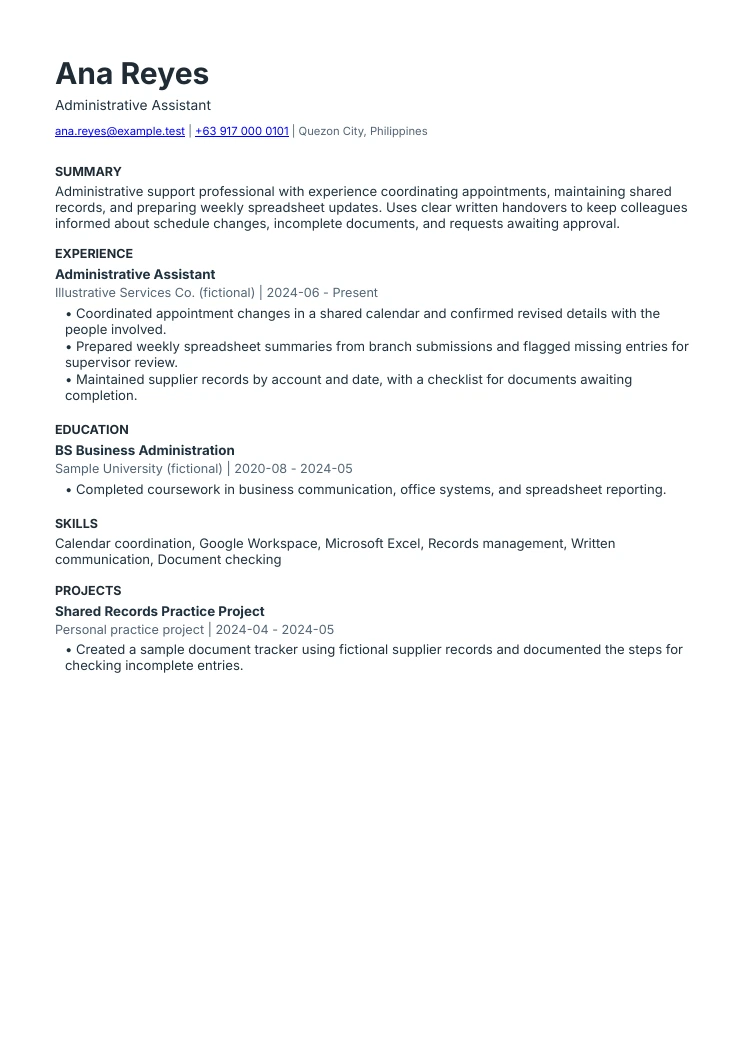
Administrative assistant resume example
The summary names actual work
Scheduling, records, and spreadsheet updates explain the type of support. The experience section provides the supporting examples.
Responsibilities have clear boundaries
Flagging an entry for supervisor review is different from approving it. This sample keeps that distinction visible.
The layout follows one reading order
Contact details, summary, experience, education, skills, and projects are text-based. The downloads are produced by the same renderer as ResumeTidy exports.
Make your application tell one clear story.
Explore tools for targeted applications, saved application kits, and improving an existing cover letter.
Explore Job Hunt tools Compare plans and included featuresCommon questions
Should the letter repeat my entire resume?
Use it to explain a small number of relevant examples and their connection to the role. The reader can use your resume for the broader history.
Can I reuse a cover letter?
You can reuse accurate material, but check the role, company, requirements, and instructions each time. Remove details that belong to a different application.
Sources & further reading
These references support specific guidance or product details. The examples and suggested workflows in this article are illustrative.
- University of Pennsylvania: effective cover letters
Guidance on specific examples, tailoring, and adding context beyond the resume.
- Europass: creating a cover letter
Further reading on connecting the vacancy’s requirements with relevant examples.